Why visit Cape of Good Hope
The Cape of Good Hope is one of the most historically significant landmarks in maritime history — the point where the sea route to India was opened to European trade in the late 15th century.
It's also inside a functioning nature reserve, so a visit isn't just a photo at the sign: you drive through fynbos-covered mountains, see wildlife, walk the shoreline and climb up to the lighthouse at Cape Point.
Where Cape of Good Hope is
The Cape of Good Hope is at the tip of the Cape Peninsula, about 90 minutes' drive south of Cape Town city centre.
The reserve is part of Table Mountain National Park. Entrance is at the main gate on the M65, and both headlands (Cape of Good Hope and Cape Point) sit inside the same reserve about 10 minutes' drive apart.
What to expect
The classic 'Cape of Good Hope' wooden sign is the anchor photo. From here you can walk down to the rocky beach or up to Diaz Point.
A short drive brings you to Cape Point itself. The Flying Dutchman funicular takes visitors most of the way up to the Old Cape Point Lighthouse; the last stretch is a 15-minute paved walk with panoramic views.
Inside the reserve, watch for Cape mountain zebra, eland, bontebok, ostriches and (in the parking lots especially) opportunistic Chacma baboons.
Best time to visit
October to April for warm, clear weather.
June to November for whale sightings off both coasts.
Early morning or late afternoon for the best light and fewest people.
How to include Cape of Good Hope in a Wanderer private tour
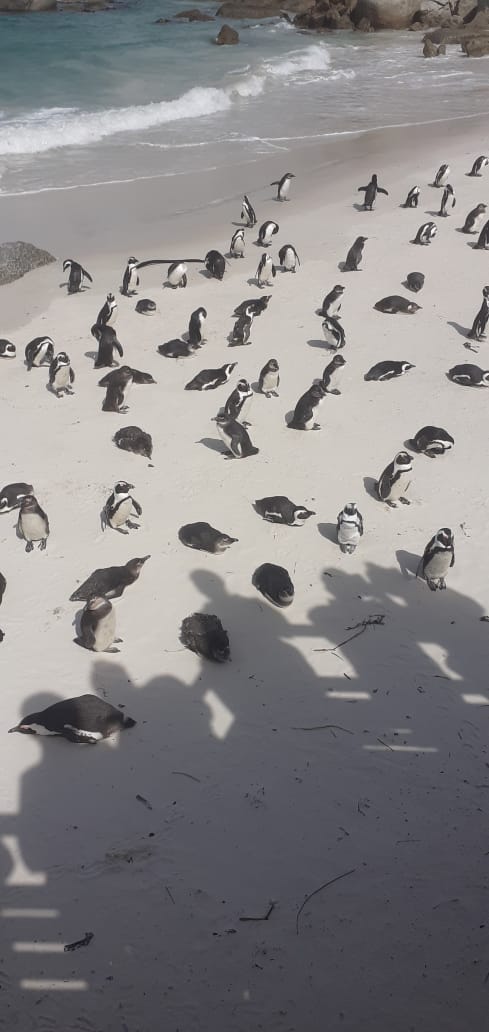
Cape of Good Hope is the anchor of a Wanderer Cape Point private day tour, usually done as a full Peninsula loop with Chapman's Peak Drive, Boulders Beach penguins, and lunch in Simon's Town, Kalk Bay or Hout Bay.
Your guide handles conservation fees, times your visit to miss the tour-bus crowds and gives you the historical and ecological context that turns a photo stop into a proper visit.
Practical tips
- Bring a windproof layer — the south-easter funnels around the headland even on hot days.
- Keep car windows up in baboon areas and never carry visible food.
- Wear proper shoes if you plan to walk up to the lighthouse.
- Fuel up before you enter the reserve — no petrol stations inside.