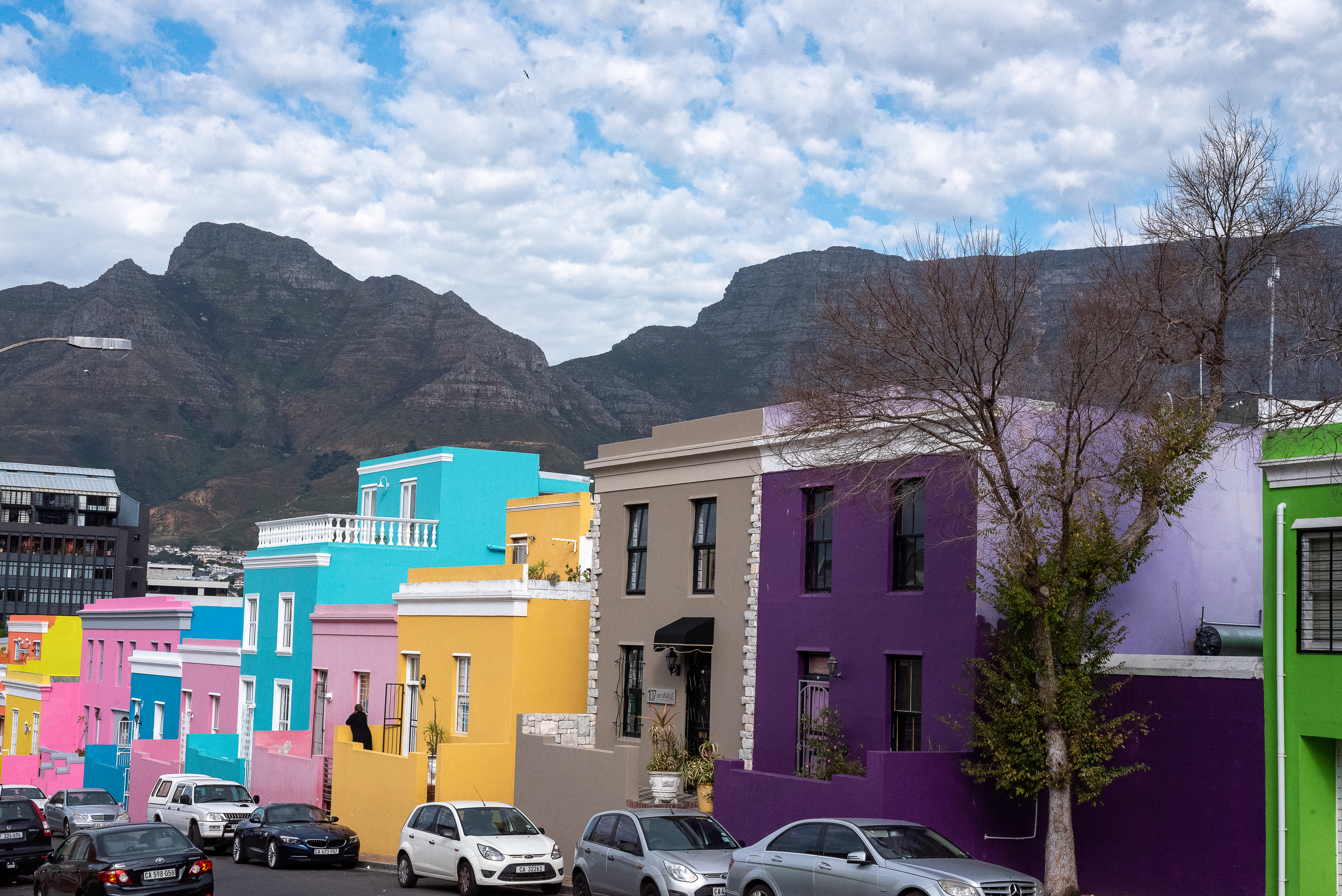
Why visit Bo-Kaap
Bo-Kaap is one of the oldest surviving residential neighbourhoods in Cape Town, dating back to the 1760s. Its Cape Malay community traces its heritage to political exiles and enslaved people brought to the Cape from South East Asia by the Dutch East India Company.
Beyond the famous colours, Bo-Kaap is home to the Auwal Mosque (South Africa's oldest, founded 1794), traditional Cape Malay cuisine, and a strong contemporary community that has fought — and largely won — to protect the neighbourhood from gentrification.
Where Bo-Kaap is
Bo-Kaap climbs the lower slopes of Signal Hill on the western edge of Cape Town's City Bowl, immediately above Buitengracht Street.
The core walking area is around Wale Street, Chiappini Street and Rose Street — 10 minutes' walk from the Company's Garden.
What to expect
A walking visit typically covers the colour-block houses along Chiappini and Wale, the Bo-Kaap Museum (the oldest surviving house in Cape Town, dating to 1768) and a stop at the Auwal Mosque.
Cape Malay cooking workshops and traditional lunches are one of the most rewarding add-ons — Wanderer can arrange a private family kitchen booking on request.
Best time to visit
Morning light is softer on the colours; late afternoon is quieter.
Fridays are quieter around midday prayers — plan around them.
How to include Bo-Kaap in a Wanderer private tour
Bo-Kaap is a standard stop on a Wanderer Cape Town City Tour, usually paired with the Company's Garden, Castle of Good Hope, District Six Museum and Table Mountain.
Because it's a living neighbourhood, we visit with a local guide who knows the residents and respects the community. That access is what makes the difference between a photo stop and a proper cultural visit.
Practical tips
- It's a residential street — never enter gardens or photograph people without asking.
- Wear comfortable shoes; the streets are cobbled and steep in places.
- Try Cape Malay food while you're there — koeksisters, samoosas and bobotie are the classics.