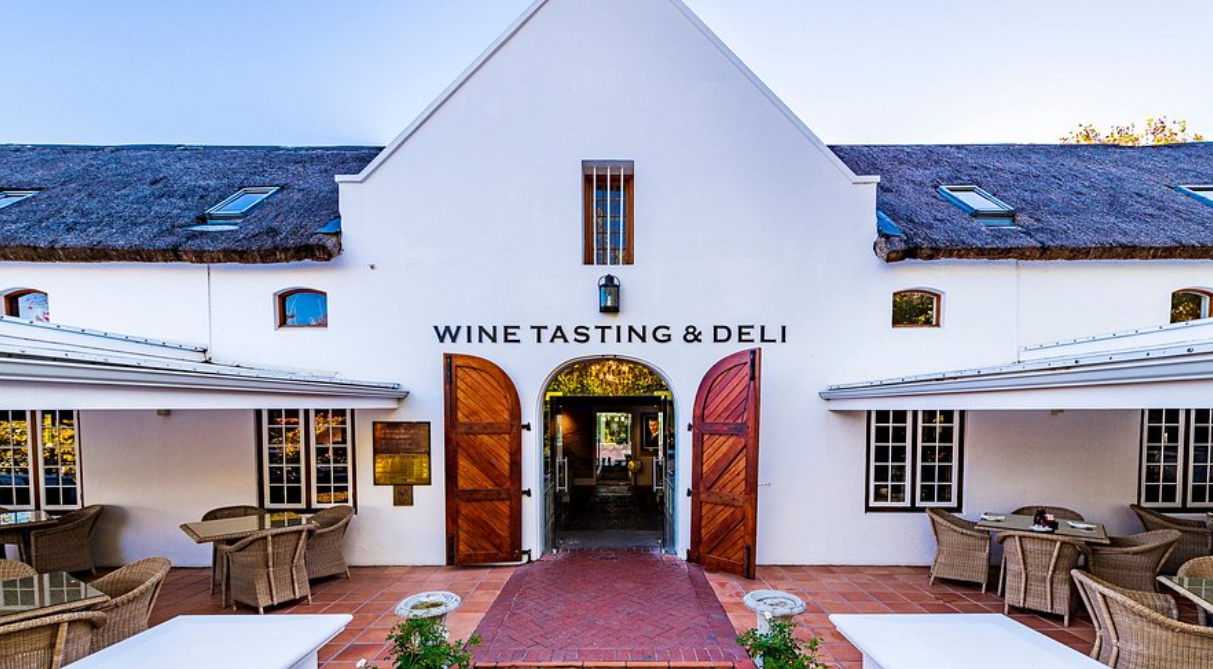
What the Stellenbosch Wine Route is
The Stellenbosch Wine Route is the umbrella term for the wineries surrounding the town of Stellenbosch — South Africa's second-oldest town, founded in 1679, and the country's oldest wine region. It was formally launched in 1971 as South Africa's first organised wine route, and it remains the largest and most influential wine region in the country by volume, prestige and vineyard area.
There are more than 150 estates on the route, loosely organised into five geographic sub-routes: Bottelary Hills (west, cooler, Chenin Blanc country), Stellenbosch Berg (north, above the town), Greater Simonsberg (north-east, prestige Cabernet country), Helderberg (south-east, near-coastal, structured reds) and Stellenbosch Valley (the main valley around the town).
Why it matters
Stellenbosch is where South African wine is taken most seriously. The town itself is a 300-year-old settlement with oak-lined streets, Cape Dutch architecture, and Stellenbosch University — one of Africa's most respected universities and home to the country's flagship viticulture and oenology faculty. Nearly every young winemaker in South Africa studies here.
The region is best known for Cabernet Sauvignon and Bordeaux-style red blends, but it also produces some of the country's best Chenin Blanc, Chardonnay, Pinotage (invented at Stellenbosch University in 1925) and Cap Classique. Weather-wise, the Mediterranean climate — warm dry summers, cool wet winters, cooling maritime breezes from False Bay — is close to ideal for these varieties.
The five sub-routes
Greater Simonsberg — mountain-shadow estates on granite soils, home to Delaire Graff, Tokara, Rustenberg, Kanonkop, Muratie. Serious Cabernet Sauvignon and Bordeaux blends, dramatic mountain views.
Helderberg — near-coastal, cooled by False Bay, structured reds and elegant whites. Estates include Rust en Vrede, Ernie Els, Waterkloof, Vergelegen.
Bottelary Hills — cooler, west-facing, home to some of the country's best old-vine Chenin Blanc. Estates include Kaapzicht, DeMorgenzon, Beyerskloof.
Stellenbosch Berg — above the town on the Stellenboschberg mountain slopes. Includes Delheim, Neethlingshof.
Stellenbosch Valley — the classic valley floor around the town, including Spier, Boschendal (technically on the Franschhoek border), Vergenoegd, Jordan.
How a Wanderer wine tour works
A private Stellenbosch wine tour from Cape Town runs about 8 hours door-to-door: pickup 09:00, at the first estate around 10:00, two morning tastings, a proper vineyard lunch, one or two afternoon tastings, home before 18:00.
The estate selection is built around what you want to drink. First-time visitors often want the flagship names and the biggest views (Delaire Graff, Tokara, Boschendal). Return visitors and serious wine people go deeper — small family estates, specific winemakers, cellar visits and library tastings we arrange in advance.
The town of Stellenbosch
Beyond the estates, the town of Stellenbosch is worth an hour on its own — oak-lined Dorp Street, Cape Dutch homesteads, the old town centre, and a few excellent restaurants and delis. Most Wanderer tours include a short town walk as part of the day.
Pairing Stellenbosch with Franschhoek
Franschhoek — 25 minutes further east — is the natural second wine day. It's smaller, more concentrated, French-influenced (Huguenot settlers arrived from 1688), famous for Cap Classique and its restaurant scene. Most travellers with time do Stellenbosch one day and Franschhoek the next.
For a single big day covering both, we can build a 'Best of the Winelands' route — one Stellenbosch estate for reds, one Franschhoek estate for Cap Classique and lunch, and one third estate depending on the day.
When to visit
Harvest season (mid-February to late April) is the most atmospheric time — the cellars are in full production, you can often watch grapes being brought in, and many estates run harvest-specific tastings and tours. October through December is peak green-vineyard weather.
Winter (June–August) is much quieter, tastings cost less, and the mountains occasionally get snow — a specific Cape Winelands experience most visitors miss. Rain is likely; bring a jacket.
Practical tips
- Book estate tastings in advance — walk-ins at top estates rarely work in peak season.
- Nominate a designated driver or (better) go with a private chauffeur — drink-driving penalties in South Africa are severe.
- Wear layers — cellars are cold, terraces are warm.
- Cash tips are appreciated at cellar tastings, but not expected.
- Ship wine home through a specialist rather than trying to check bottles yourself — Wanderer can recommend a shipper.
Responsible travel
- Support small family-owned estates as well as the flagship names.
- Never self-drive after tasting — get a chauffeur or private tour.
- Pace yourself: three considered tastings is more memorable than five rushed ones.