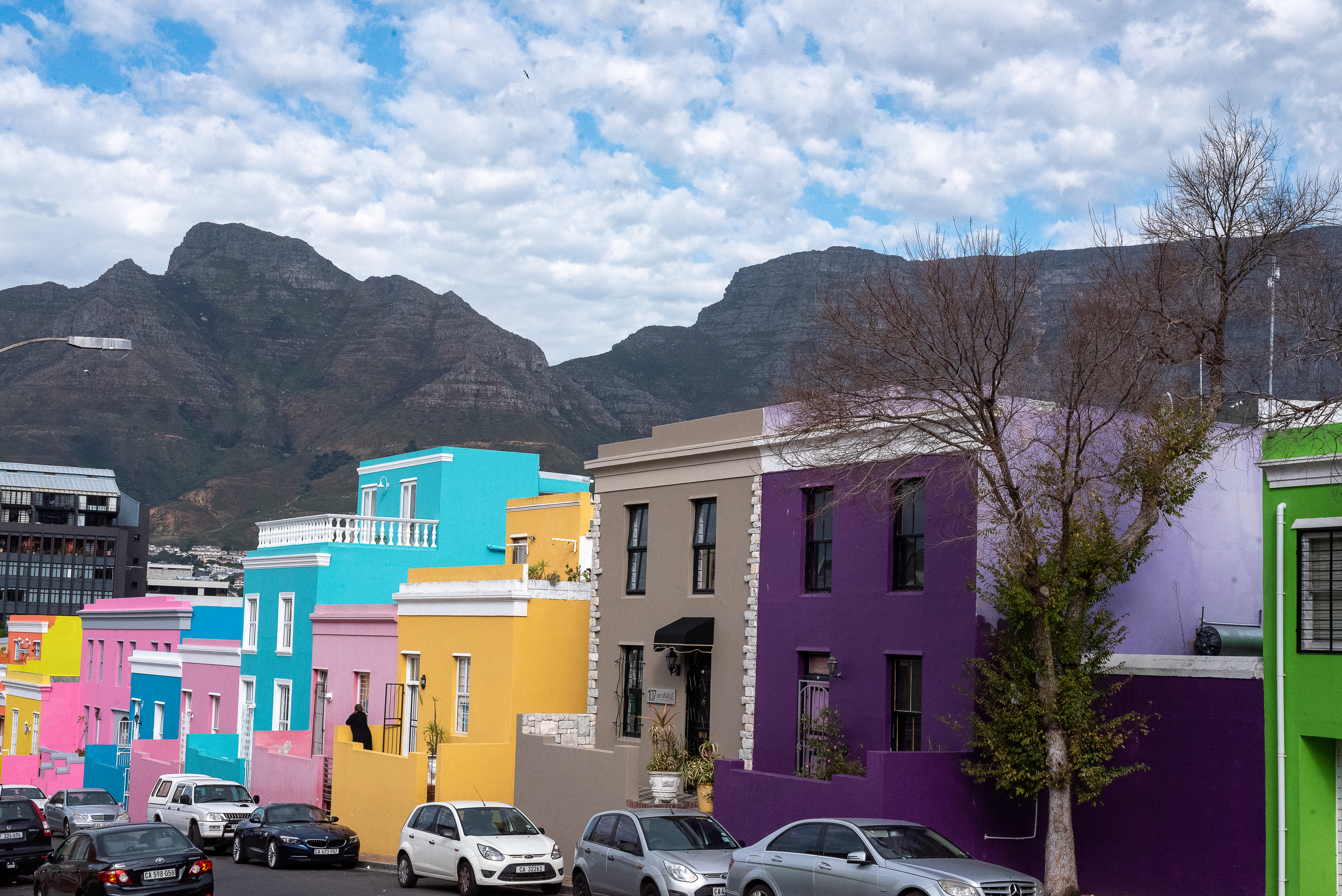
What is Bo-Kaap?
Bo-Kaap — Afrikaans for 'above the Cape' — is a residential neighbourhood that clings to the northern slopes of Signal Hill, immediately above Cape Town's downtown. Its houses date from the late 18th century onwards, most of them narrow terrace homes with flat façades in the Cape Dutch–Georgian style, and every one painted in a different colour.
It's the historic and cultural home of Cape Town's Cape Malay community — descendants of enslaved and exiled people brought to the Cape from present-day Indonesia, Malaysia, Sri Lanka and India by the Dutch East India Company from the mid-1600s onwards. That heritage is visible everywhere: in the mosques, the food, the family names, the small businesses.
Why the colourful houses?
The origins of the paintwork are part of Cape Town folklore. The most-repeated story is that after the Slavery Abolition Act of 1834, the newly freed residents of what was then called 'The Malay Quarter' painted their previously-white rental houses in vivid colours as a public declaration of freedom and identity.
Historians point out that the tradition may have developed more gradually. Whatever the exact origin, the pastel façades are now the neighbourhood's most recognisable visual character, are protected under South African heritage law, and are what visitors travel across the world to photograph on Chiappini and Wale Streets.
Where Bo-Kaap is
Bo-Kaap sits immediately above the CBD — a five-minute uphill walk from Long Street. The most-photographed streets are Wale, Chiappini, Rose and Pentz. The Bo-Kaap Museum (in the oldest surviving house in the neighbourhood, on Wale Street) is a small, worthwhile stop and a good place to orient yourself.
On a driving tour, Bo-Kaap works as a walking loop: leave the car above the neighbourhood, walk the cobbled streets downhill, and rejoin the vehicle at the bottom.
Auwal Mosque and the Cape Malay heritage
The Auwal Mosque on Dorp Street was founded in 1794 and is the oldest mosque in South Africa. It's a small, unassuming building that played a central role in preserving Islamic religious and linguistic tradition through the Cape's most repressive years — early Cape Muslims wrote some of the first Afrikaans texts here (in Arabic script) to teach the language to their children.
Bo-Kaap has multiple other mosques (Nurul Islam, Palm Tree, Bo-Kaap) all within walking distance. All are working places of worship. Respectful visits are sometimes possible outside prayer times — your guide will make the arrangements.
Cape Malay food
Cape Malay cuisine is one of South Africa's original cuisines — a slow blend of Indonesian, Malay, Dutch, Cape and Indian techniques and ingredients. Signature dishes include bobotie (spiced mince baked with an egg custard), denningvleis (sweet-sour lamb stew), tomato bredie, samoosas, roti, koeksisters, and koesister (the plumper Cape Malay version).
Bo-Kaap has a strong tradition of home-based cooking classes and small family-run restaurants. On a Wanderer city tour, we can build in a Cape Malay lunch or an in-home cooking class — both are among the most memorable food experiences in Cape Town.
How it fits into a Cape Town day
Bo-Kaap is a natural stop on a private Cape Town City Tour, usually paired with the Company's Garden, the Castle of Good Hope, District Six Museum, the V&A Waterfront and — weather permitting — the Table Mountain cableway or a Signal Hill sunset.
As a standalone, an unhurried Bo-Kaap walk with the Bo-Kaap Museum takes about 90 minutes; add a meal or a cooking class and it becomes a comfortable half-day.
Visiting respectfully
Bo-Kaap is a residential neighbourhood, not an open-air museum. Keep noise down, don't photograph through windows or into homes, don't sit on private doorsteps for photos, and follow your guide's cues around mosques and community spaces.
Spending money locally is the most direct way to support the community — buy the koesisters, book the cooking class, tip well at the family restaurant. Bo-Kaap has been under significant gentrification pressure; visitor spending that stays in the neighbourhood helps.
Practical tips
- Morning light is the best for photographs — the houses face east and glow before 10:00.
- Wear comfortable shoes — cobbles are uneven.
- The streets are steep — allow time for the uphill walk if you're arriving from Long Street.
- Modest dress if you plan to visit a mosque; women should carry a scarf.
- Cash in small denominations for koesisters at the corner shops.
Responsible travel
- Bo-Kaap residents live here — treat streets and doorsteps as people's front yards.
- Ask before photographing people; landscapes and façades are fine.
- Spend money at family-owned businesses inside the neighbourhood.